

By Andrea Bartha & Peter Antal, certified wingwave coaches
What is wingwave® coaching? (in short)
In short: wingwave® is a short-term coaching method that combines eye movements similar to those of REM sleep, elements of NLP and a simple muscle test. It finds the stress emotions behind fear, anxiety and panic and processes them, without long analytical conversations and without having to relive painful events. Sessions are online, in English or German. You can start with a free 15-minute intro call.
How does wingwave coaching work with fear, anxiety and panic?
What happens to difficult experiences in the nervous system?
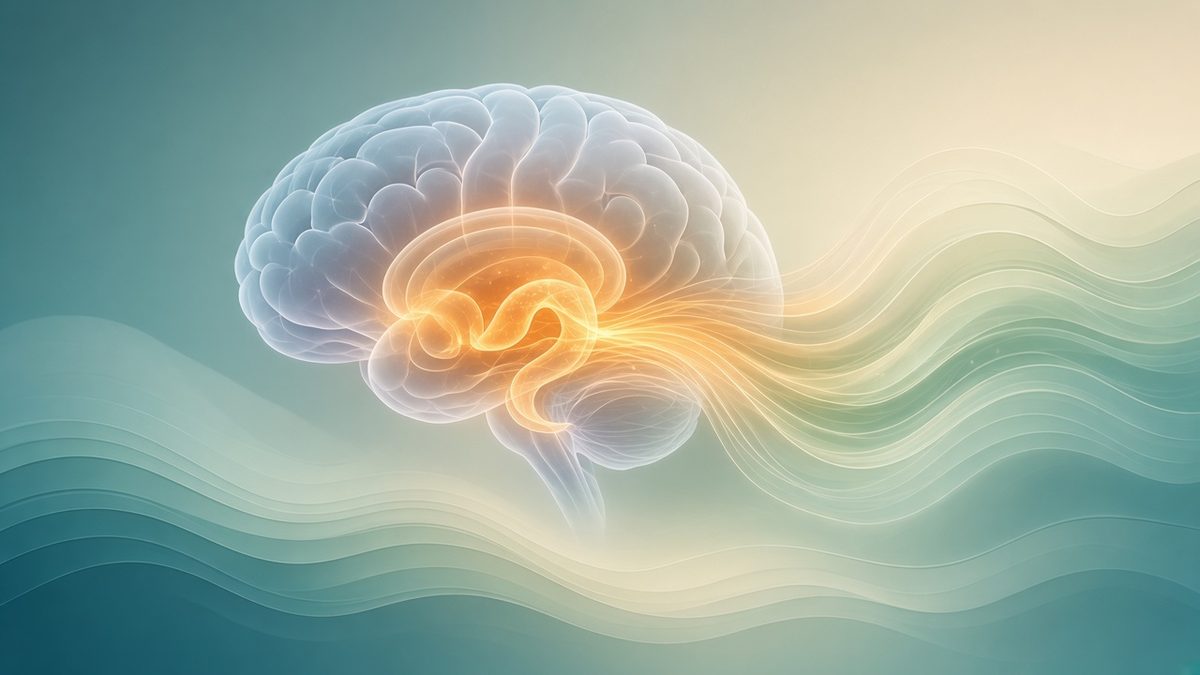
Emotional memories and stress reactions are closely linked to the limbic system, especially two areas: the amygdala and the hippocampus. The amygdala handles fear and our sense of danger. The hippocampus organises the context of our memories. It helps us remember which circumstance, place or situation a memory belongs to. We remember not only what happened, but also where and when, and which feelings or events surrounded it.
Why can unprocessed experiences trigger anxiety and panic?
When something overwhelming happens to us, such as an accident, a violent event or a loss, the first reaction takes place in the limbic system. Only afterwards does the conscious mind try to make sense of it. Losing a pet, for example, affects us on both a conscious and an unconscious level. The conscious part is what we notice and live through straight away: we feel sad, we remember the moment of loss, and we grieve. Some of this we can work through by talking and remembering. Unprocessed trauma, however, can trigger automatic, involuntary reactions.
The unconscious part, the emotions we have not yet processed, can remain stored in the limbic system. This can happen when emotions are too strong or too complex to process at the time. They get “stuck”. Our nervous system then tries to keep us functioning while carrying this load. When something activates these emotions (a memory, a sound, a smell), they can trigger automatic reactions such as sudden sadness, anxiety or even panic. It is a bit like a bug in a piece of software: a small error that does not belong there, and the program stops running smoothly.
When panic hits, we cannot stop it with our thoughts alone, because the problem is not caused by our thoughts; it is our emotional system reacting. For lack of another solution, we naturally try to calm ourselves in all sorts of ways, often with techniques we have learned. But to eliminate this kind of reaction for good, the burdening emotions stored in the limbic system need to be processed. In the meantime, many people find it calming to listen to wingwave music through headphones. The sounds alternate between the left and right ear, and in wingwave this is used to support relaxation.
See everything wingwave coaching can effectively help with
What does REM sleep have to do with wingwave coaching?
Our nervous system has a natural processing programme that runs every night: the REM (rapid eye movement) phase of sleep. During REM sleep the brain is very active, the eyes move rapidly, and this is when we dream the most. The brain processes the day’s experiences, strengthens memory and sorts emotions, and new neural connections can form. The body’s muscles relax almost completely. You could call REM sleep the nervous system’s maintenance crew. It supports learning, memory, emotional processing and recovery.
Experiences and feelings that are too intense, too strong or traumatic are not processed in the normal REM phase. They stay as unprocessed, unconscious feelings and keep putting a load on the nervous system.
A wingwave coach uses similar eye movements with you while you are awake, so that the emotions linked to your issue can be processed in a focused, gentle way. Clients often sigh deeply. Feelings or images may pass through, memories may come up, or body sensations and tension may appear and fade within a short time. Some describe it as bubbles rising and releasing. Many clients say they feel lighter and more relieved afterwards. Some arrive at the next session and realise the issue they came with has hardly crossed their mind. Clients often experience these changes as lasting. Results vary from person to person.

Book your free 15-minute intro call
What are the three building blocks of wingwave® coaching?
1. Eye movements: similar foundations to EMDR
wingwave® coaching builds on similar foundations to EMDR (Eye Movement Desensitisation and Reprocessing). EMDR is an established psychotherapy for trauma, developed by Francine Shapiro in 1987 (EMDR Institute). In EMDR the client recalls a distressing experience while guided eye movements or gentle tapping support processing. The World Health Organization includes EMDR in its 2013 guidelines for post-traumatic stress disorder (PTSD), and the American Psychological Association’s 2017 PTSD guideline conditionally recommends it.
wingwave uses elements of EMDR, but it is coaching, not therapy, and you do not need to relive distressing events.
2. NLP
Neuro-Linguistic Programming (NLP) was developed in the 1970s by Richard Bandler and John Grinder to understand patterns in human communication and behaviour. According to NLP, our inner experiences are organised through visual, auditory and bodily (kinaesthetic) channels. wingwave® coaching uses this model in its three-level eye-movement work, which aims to process unresolved emotional blocks gently. The method combines the NLP framework with elements of EMDR for even more effective emotional processing.
3. The myostatic muscle test
In wingwave® coaching we use the myostatic muscle test as a feedback tool to find stress triggers and unprocessed emotions, so that each session can focus on what matters most to you. You form a ring with your thumb and index finger, and the coach tries to pull it apart, gently but firmly. A weak hold indicates heightened mental stress and emotional overload, while a strong hold signals activated inner resources and emotional stability. Psychologist Dr. Marco Rathschlag studied the muscle test in his doctoral research at the German Sport University Cologne, using a measuring device (Rathschlag & Memmert, 2014).
Can stress come from before birth or from earlier generations?
What burdens our nervous system is often more complex than we first think. Our findings, subjective and based on years of practice, are that roughly 25–30% of it seems to stem from events in our own lives, while around 70–75% seems to be linked to experiences before birth or to transgenerational trauma, meaning the experiences of our parents and ancestors, carried across generations.
Research is also starting to explore this. Rachel Yehuda and colleagues studied Holocaust survivors and their adult children and found related epigenetic changes in both generations. This is an early indication of one way the effects of severe trauma may be passed on (Yehuda et al., Biological Psychiatry, 2016). On the prenatal side, a review by Van den Bergh, Mulder, Mennes and Glover concluded that a mother’s anxiety and stress during pregnancy are linked to a higher risk of emotional and behavioural problems in the child later on (Neuroscience & Biobehavioral Reviews, 2005).
wingwave® coaching was developed in Germany in 2001, so it is still a relatively young and not widely known method. Since 2018, wingwave® coach training has been certified by TÜV NORD to ISO 29993, an international quality standard for learning services.
Video: what is wingwave? (official explainer, in English)
How many wingwave sessions will I need?
wingwave® coaching does not rely on long, analytical conversations. In the first session we talk through your goals and topics in detail. After that, each session works directly with the feelings linked to your issue, which keeps the work focused.
How many sessions you need depends on how much you are carrying, but wingwave coaching is not meant to last for years. With an average level of load, about 12–14 wingwave sessions cover almost everything. Some clients notice the change they wanted after just 3–4 sessions. We discuss this together after the first session.
Many clients find it a relief that wingwave involves no guesswork about hidden causes and no room for self-blame, no “I should have got over this long ago” or “It’s my fault I can’t let this go”. wingwave works from the idea that many of the things we would like to change, such as self-confidence, anxiety or fears, are linked to emotions we have not yet processed, and that these can block access to our inner resources.
What can I expect when I finish wingwave coaching?
Our aim is that you finish coaching feeling freer, whole and balanced, more stable and confident, with more energy and clearer, healthier boundaries. If there is something you would like to let go of, change or improve in your life, take the first step: book your free 15-minute intro call. Sessions are online, in English or German.

Meet your coaches, Andrea Bartha and Peter Antal · Read more articles on stress, anxiety and wingwave coaching
Frequently asked questions
What is wingwave® coaching?
wingwave® is a short-term coaching method developed in Germany in 2001. It combines eye movements similar to those of REM sleep (with foundations similar to EMDR), elements of NLP and the myostatic muscle test to find and process the stress emotions behind issues such as fear, anxiety and panic.
Do I have to relive painful events in wingwave coaching?
No. wingwave uses elements of EMDR, but you do not need to relive traumatic events, and there are no long, analytical conversations.
How many sessions does wingwave coaching take?
With an average level of load, about 12–14 wingwave sessions cover almost everything, and some clients notice the change they wanted after just 3–4 sessions. wingwave is not meant to last for years, and we discuss the likely number together after the first session.
Is wingwave coaching a form of therapy?
No. wingwave is coaching, not therapy, and it is not a substitute for medical or psychological treatment.
Can I do wingwave coaching online?
Yes. Our sessions are online, in English or German. You can start with a free 15-minute intro call.
Wingwave coaching is not a substitute for medical or psychological treatment. If you are in crisis or have a diagnosed condition, please consult a qualified professional.
If you’d like to understand what stress actually does in your body, we wrote about it here: What Stress Does to Your Nervous System, and Why You Can’t Just “Think” Yourself Calm.